

The Busted-Up, Bleeding Truth About Courage
Resilience is never about the size of what you survive. It's about what you choose to do with it.

A friend messaged me this mornign with a line that made me laugh out loud, at the gym, mid-lunge, causing a few curious glances. She said “our grandparents got to cruise in life.” Given the conversation, she didn’t mean it the way it sounded. But it got my brain going, and I found myself bullet pointing the stories I had heard from my grandparents and the letters we had found after their passing.
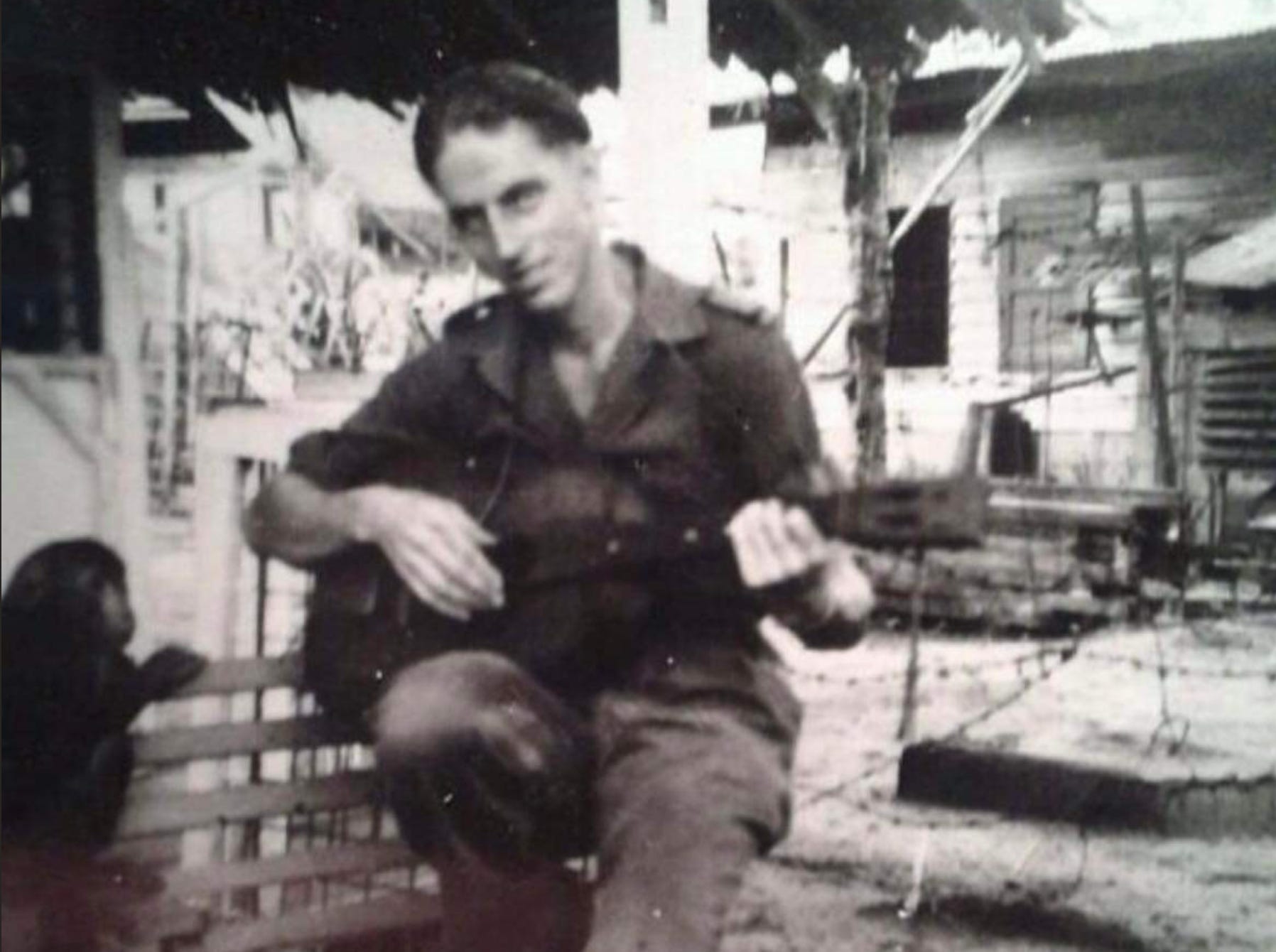
On my dad’s side:
Surviving World War II in the Netherlands (So many stories within this fact alone, but those are tales for another day). My Opi’s (a Dutch word for grandpa) mother dying hiding him and his brothers from Nazi recruits. The rebuilding of a post war society, and then being stationed in Indonesia. Sailing to another continent, paid for by an established farmer in Canada, upon arrival earning twenty-seven cents a day for years as one level above a slave to work off that debt of being brought over. Then the work of actually building a life and a living, bring their parents over, caring for and housing them. Raising children and laying a foundation for the generations to come.
On my mom’s side:
Also surviving the war in the Netherlands which again is a whole book on its own with the stories they’ve shared. The rebuilding of a nation. My Oma (a dutch word for grandma) being told her generation was hopeless because of the education they missed and she was destined to be stupid. Married and when things were finally establishing: kids, business, a home, the accountant running off with their money. A second business, where his rival went around telling his clients he had died, and took them all. Doing the work to get back or replace what was lost through that. After which hearing about this country where there was land investment and business opportunities. Picking up the family of 7 kids (and the dog) and moving to Canada to start again once more.
There’s the short version. Enough to get me thinking about how hardship and resilience seemed to mean VERY different things back then.
Even my own experiences in my late 20’s of business bankruptcy, divorce, ostracisation, debt repayments and homelessness don’t even begin to scratch the surface of their hardships. Would my resilience even hold up? Do my struggles seem that much bigger, because they might not even be considered hard in their experience?
I thought about this during the drive home, doing the comparison, feeling all kinds of feelings about how long it took me to metabolise my experiences, and that even to this day I feel like i’m catching up. And then a moment of realisation, this comparison is a trap. What I was missing, and what many overlook: My grandparents did not feel heroic. Not while it was happening. There was no swelling music when my Opa learned the accountant was gone. He didn’t square his shoulders and think, ah, the second act of a remarkable life. He thought about the rent. About the kids. About the third child coming and the money that wasn’t there. He was, like all of us, simply trying to survive a Tuesday.
The heroism is something we can see now, from the outside, from down the line, from the comfort of being the grandchild who gets to write it all down on a quiet afternoon. But it was invisible to the person living it.
Maybe this is why the passage inJordan Peterson’s book Beyond Order, has been haunting my mind since I read it earlier this week:
“When you are visited by chaos and swallowed up, when nature curses you or someone you love with illness, or when tyranny rends asunder something of value that you’ve built... it is salutary to know the rest of the story. All of that misfortune is only the bitter half of the tale of existence without taking note of the heroic element of redemption, or the nobility of the human spirit requiring a certain responsibility to shoulder. We ignore that addition to the story at our peril. Because life is so difficult that losing sight of the heroic part of existence could cost us everything.”
The bitter half? It is loud. It announces itself without hesitance. Yet the heroic half is quiet, almost humble in its arrival. It doesn’t feel like nobility while you’re shouldering the responsibility. It feels like getting up. Again. It feels like the unremarkable, undocumented decision to keep getting up when no reasonable person would have blamed you for staying down.
A friend of mine going through a life-altering experience recently wrote to me: “I noted the other day that courage doesn’t always look like I thought it would. Sometimes you’re just dragging yourself along, busted up and bleeding. It does not feel courageous.”
We, as humans, seem to be very good at narrating the misfortune, but are catastrophically bad at noticing, in real time, the redemption arc running right alongside it. Yet, while it is not easy, there is always a choice on our part.
Viktor Frankl, put it as plainly as it can be put:
“Between stimulus and response there is a space. In that space is our power to choose our response. In our response lies our growth and our freedom.”
My grandparents didn’t get to choose their stimulus, the war, the loss, status (or lack thereof), none of it was in their control, it almost never is. What was theirs, every single time, was the space that came after. In that space they chose, over and over and over again, what the struggle would be permitted to mean. Not in some triumphant, jaw-set, music-swelling way, while an audience cheered them on. They chose it the way most of us actually make the heroic choice: dragging yourself along, busted up and bleeding.
We are exquisitely tuned to the stimulus: the loud, arriving fact of what’s going wrong, or how we messed up. We almost never stop to honour the response, because the response doesn’t feel like an achievement. It feels like fixing, like being behind, lost or simply surviving. But the continuing is the heroism. The choice, made in the space, to decide what this gets to mean in our larger story. I think that is the redemptive half Peterson says we ignore at our peril. And we ignore it not because it’s hidden, but because we hand it away. We treat the response as something the circumstances decide for us, when it was ours the entire time.
So the comparison I had gone down of “is my hardship even valid?” was never the real question. My grandparents’ lives were objectively harder than mine; that part isn’t close. But the thing that made them who they became wasn’t the size of the hardship. It was what they chose to do after it. And that space is not larger for them than it is for me. It is exactly the same size for everyone. A war and a bankruptcy are by no means the same weight, yet the gap between what happens and what you choose to make of it is identical, and it is always, always yours.
So what does this mean for us?
Well, it means in the thick of whatever we’re in, whatever “level of hard”: You will not get to choose most of what happens. The stimulus will keep arriving, loud and uninvited. But the space is yours. It is yours today, and it will be yours tomorrow, and it will be yours every time the next challenge arises. Because the choice is not made just once. It is made again and again and again, for as long as you’re alive to make it. To get up. To decide what this will have meant. To keep authoring the heroic half of a story whose bitter half you did not write.
Like my friend wrote: “courage doesn’t always look like I thought it would. Sometimes you’re just dragging yourself along, busted up and bleeding. It does not feel courageous.”
But it is ours to remember that sometimes the dragging IS the courage. And we don’t have to wait for a grandchild to ask on a summer’s eve to recognize that. We can, in the moment, refuse to let the loss or failure be the whole story. To allow ourselves a moment of space, so we CAN note the heroic element of redemption, or the nobility of the human spirit requiring a certain responsibility to shoulder in the moment. To recognise our courage in facing whatever it is that has come our way and getting up once more.
Whatever the stimulus, the choice is always yours.
Thissss...
So incredibly powerful and the insight I have been looking for. Of course the choice between stimulus and response is insightful and needed, but for me, the reality of comparison.
To both honor ourselves in our tragedy and trauma and still move forward.
But to not say, oh, my parents weren't killed in front of me at age 6 or I wasn't sold into slavery as a teenager, so my problems don't exist.
It's been so challenging for me to sit in the duality of honoring my pain and also stepping into action regardless.
Thank you for such and insightful piece.
I like what you did with the information you had about your grandparents.